I’ve built and tested more gaming PCs than I care to count.
You’re here because you want to know what specs actually matter for competitive play. Not what some forum says. Not what your friend’s cousin recommends. What works.
Here’s the truth: most people waste money on the wrong components. They buy an expensive GPU and pair it with a CPU that can’t keep up. Or they overspend on parts that look good on paper but don’t translate to better performance in game.
I’ve spent thousands of hours analyzing what separates a setup that gets you killed from one that gives you the edge.
This is the official T-Port eSports guide to gaming PC specs. We test this stuff. We watch pros play on different builds. We know what actually delivers frames when you need them most.
You’ll get three clear options here: Entry-Level, High-Refresh, and Pro-Tier. Each one is balanced so you’re not bottlenecking performance or throwing money away.
No guessing which CPU matches which GPU. No wondering if your RAM speed matters (it does, but not how you think).
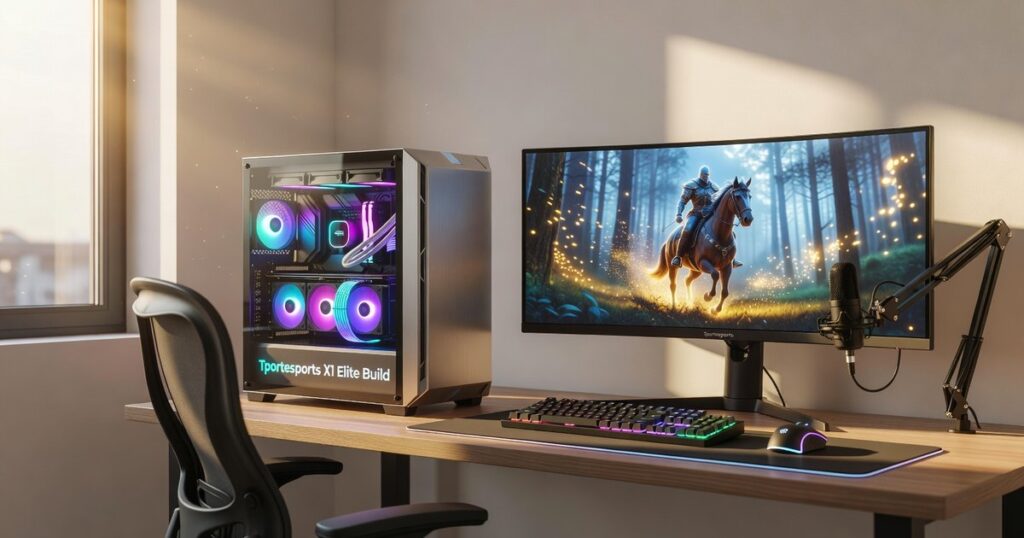
Just the recommended gaming pc build tportesports specs you need to compete at your level.
The Philosophy of Performance: Key Components Explained
You know what drives me crazy?
People dropping two grand on a gaming PC and wondering why their frames still stutter in ranked matches.
Here’s what usually happened. They bought whatever the sales guy recommended without understanding what each part actually does.
CPU (The Brain)
Your processor matters more than most people think.
Single-core speed is what keeps your frames high in Valorant and Apex Legends. These games don’t care if you have 16 cores. They care about how fast each core can process information.
Cache size? That’s your CPU’s short-term memory. More cache means less time waiting for data (which translates to smoother gameplay).
But if you’re streaming while you play, that’s when multi-core count starts mattering. Encoding video eats cores for breakfast.
GPU (The Muscle)
Your graphics card pushes pixels. Simple as that.
At 1080p, you’re looking at around 2 million pixels per frame. At 1440p, that jumps to 3.7 million. 4K? Nearly 8.3 million.
VRAM is what holds all those textures. Run out of VRAM and your game starts stuttering while it swaps data in and out of system memory. I’ve seen too many builds with powerful GPUs but not enough VRAM for their settings.
RAM (The Reflexes)
16GB is where you start. 32GB is where competitive players live.
But here’s what bugs me. People buy 32GB of slow RAM and think they’re set. Speed (measured in MHz) and latency (CL timing) both affect frame time consistency.
You want your frames arriving at predictable intervals. That’s what RAM speed does for you.
Storage (The Speed)
An NVMe SSD isn’t optional anymore.
Gen3 drives are fine for most games. Gen4 gives you faster load times in newer titles. Gen5? That’s overkill for gaming right now (but future-proofing isn’t a bad idea).
What matters is getting into matches fast and keeping your system responsive. A recommended gaming pc build tportesports style always starts with NVMe storage.
No spinning hard drives. Ever.
Build Tier 1: The Esports Initiator (1080p High-FPS Gaming)
Think of this build like a track car.
You’re not trying to win drag races or look pretty in a parking lot. You want one thing: lap times. In gaming terms, that means frames per second.
Your goal here is simple. Hit 144+ FPS in the games you actually play. Valorant, CS2, League of Legends, Fortnite. The titles where every millisecond counts.
Here’s what you need.
CPU: AMD Ryzen 5 7600
This chip is your engine. Six cores that clock high and stay there. Esports games don’t care about having twelve cores. They care about how fast each core runs. The 7600 delivers exactly that without the price tag of flagship processors.
GPU: NVIDIA GeForce RTX 4060
Pair it with this card and you’ve got balance. The 4060 handles 1080p like it’s nothing (which is the whole point). You won’t see your CPU waiting on your GPU or vice versa. They work together the way a good transmission matches an engine.
RAM: 16GB DDR5 5600MHz CL36
Sixteen gigs is your baseline. DDR5 at 5600MHz gives you the speed modern games expect. Going lower means you’re leaving performance on the table.
Storage: 1TB Gen4 NVMe SSD
One terabyte of fast storage. Gen4 speeds mean your games load before your teammates finish complaining about their last match.
This recommended gaming pc build tportesports setup isn’t about maxing out settings. It’s about winning. And winning means frames.
Build Tier 2: The Competitive Champion (1440p High-Refresh Rate)
This is where things get serious.
If you’re playing at 1440p with a 165Hz monitor, you’re not messing around anymore. You want every frame you can squeeze out because you know the difference between 120fps and 180fps isn’t just numbers on a screen.
It’s the difference between tracking that slide cancel and getting caught flat-footed.
The CPU: Go Big or Go Home
I’m going to be straight with you. The AMD Ryzen 7 7800X3D is the chip I’d pick for this tier. That 3D V-Cache makes a real difference in competitive games where you need consistent frame times.
Some people swear by the Intel Core i7-14700K instead. More cores, they say. Better for multitasking.
And yeah, if you’re streaming while you play, they have a point. But for pure gaming performance? The 7800X3D wins more often than not (especially in games like Warzone or Apex where cache matters).
The GPU: Your Frame Generator
Here’s where you need to spend money. A recommended gaming pc build tportesports at this level demands a GPU that won’t choke when things get chaotic.
The NVIDIA GeForce RTX 4070 Super is my pick. You’re looking at 180+ fps in Valorant, 140+ in Warzone at high settings, and solid performance in basically everything else you throw at it.
The AMD Radeon RX 7800 XT costs less and trades blows in raw performance. But NVIDIA’s frame generation tech gives you an edge in supported games (and that list keeps growing).
RAM & Storage: Don’t Bottleneck Yourself
32GB of DDR5 at 6000MHz CL30. That’s the spec.
You might think 16GB is enough. It’s not. Not anymore. When you’re in a 40-player endgame with abilities flying everywhere, that extra headroom keeps your frames stable.
For storage, grab a 2TB Gen4 NVMe drive. Games are huge now and you don’t want to juggle installs every week.
Cooling & Power: The Boring Stuff That Matters
These components run hot and pull serious power.
You need either a quality 280mm AIO or a high-end air cooler like the Noctua NH-D15. And your PSU? 750W minimum, 850W if you want headroom for upgrades.
This tier isn’t cheap. But if you’re serious about competitive play at 1440p, this is what it takes to stay ahead.
Build Tier 3: The Pro-Streamer & 4K Powerhouse
I’ll never forget the first time I tried streaming while gaming on a mid-tier setup.
My frames tanked. The stream looked like a slideshow. Chat was roasting me.
That’s when I learned something important. If you want to stream and game at the same time without looking like an amateur, you need serious hardware.
Now some people will tell you that you don’t need top-tier components. They’ll say a good mid-range build can handle streaming just fine if you tweak your settings enough.
And technically? They’re right. You can make it work.
But here’s what they won’t tell you. You’ll spend hours messing with encoder settings. You’ll drop your in-game quality to maintain stream quality. You’ll still get frame drops during intense moments.
I tried that route. It sucked.
This tier is different. No compromises. No choosing between smooth gameplay and a clean stream.
The CPU: Why Core Count Actually Matters
You need either the AMD Ryzen 9 7950X3D or Intel Core i9-14900K.
I run the 7950X3D in my main rig (the 3D V-Cache makes a real difference in certain games). The extra cores handle stream encoding while your game runs on dedicated cores. Your performance barely takes a hit.
When I switched from a 6-core to a 16-core processor, my stream quality jumped from “okay I guess” to actually professional looking. Same bitrate. Same settings. Just more cores doing the heavy lifting.
The GPU: 4K Without Excuses
The NVIDIA GeForce RTX 4090 is the only choice here.
Yes, it’s expensive. Yes, you could compare gaming consoles tportesports and spend way less.
But if you want native 4K with ray tracing on? This is it. DLSS 3 makes games that should be unplayable at 4K run buttery smooth. I’m talking 100+ fps in titles that would cripple lesser cards.
RAM & Storage: Don’t Bottleneck Your Beast
Start with 32GB of DDR5 RAM. If you’re running Chrome with 47 tabs open while streaming (we all do it), go 64GB.
For storage, grab a 2TB Gen5 NVMe SSD as your main drive. Your OS and active games live here. Then add a secondary 4TB SSD for stream recordings and footage. Trust me, those files pile up fast.
The Foundation: Motherboard, PSU, and Cooling
This recommended gaming pc build tportesports needs a solid foundation.
Get a high-quality motherboard with good VRM cooling. You’re pushing serious power through these components.
A 1000W+ PSU isn’t overkill here. It’s necessary. The 4090 alone can pull 450W under load.
And for the case? Airflow matters more than RGB. These parts run hot. I learned this after my first build thermal throttled during a 6-hour stream session.
Your Blueprint for Victory
You now have a clear plan for building a gaming PC that matches your goals.
No more guessing about which parts you need. No more wondering if you’re wasting money on specs that don’t matter for your games.
I’ve shown you how to match components to what you actually play. Whether you’re grinding ranked matches at 1080p or streaming 4K gameplay, you know exactly what hardware will get you there.
Every dollar you spend should push your performance forward. That’s how you build a machine that gives you a real edge.
Here’s what to do: Pick the tier that fits your budget and what you want to achieve. Then start putting together the recommended gaming pc build tportesports that will carry you to your next win.
The right setup doesn’t just run your games. It removes the technical barriers between you and victory.
Stop overthinking it. Choose your components and start building. Homepage. Tportesports Gaming Hacks by Theportablegamer.