I’ve spent years watching people confuse these two terms like they mean the same thing.
You’ve probably heard “gamer” and “player” thrown around interchangeably in esports conversations. Maybe you’ve used them that way yourself. But here’s the thing: the difference between gamer and player isn’t just semantics.
It’s the line between someone who loves games and someone who competes to win.
This matters if you’re trying to figure out where you fit in the competitive scene. Or if you’re watching esports and wondering why some people make it pro while others with similar hours logged never break through.
I’ve analyzed hundreds of professional matches and player interviews. I’ve watched careers take off and others stall out. The pattern is clear once you know what to look for.
This article breaks down what each term actually means. Not the dictionary definition. The real one that matters in competitive gaming.
You’ll see the differences in how they practice, how they think about the game, and what drives them to keep playing. By the end, you’ll understand exactly what separates someone who plays games from someone who plays to win.
No fluff about passion or talent. Just the concrete differences that define tportesports competitors.
The Gamer Archetype: Passion, Recreation, and Community
Most people use gamer and player like they mean the same thing.
They don’t.
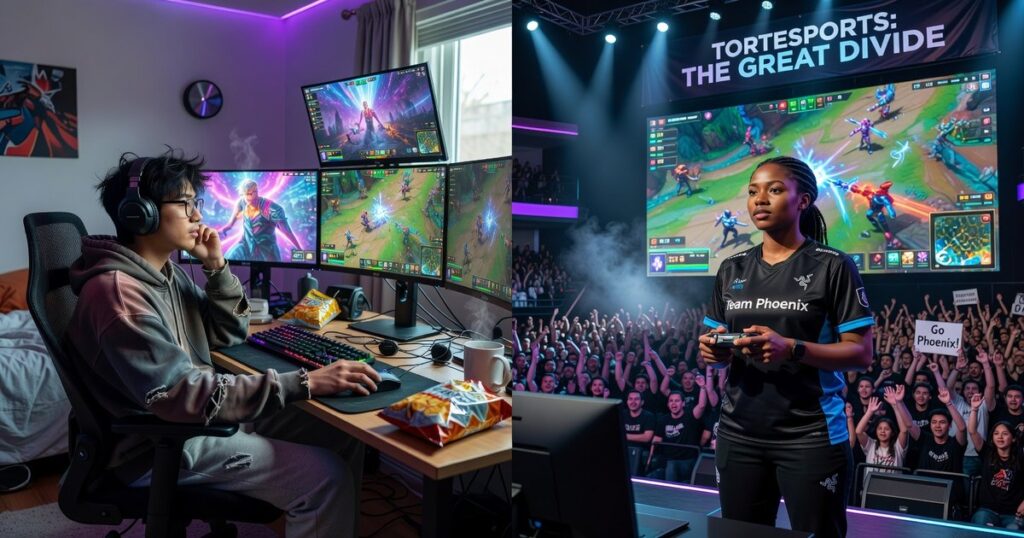
A gamer plays for the love of it. A player plays to win.
I see this split every day in the communities I work with. And honestly, it’s one of the most misunderstood distinctions in competitive gaming.
What Actually Drives Gamers
Here’s what the data shows us.
A 2023 study by the Entertainment Software Association found that 67% of gamers cite stress relief and relaxation as their primary reason for playing (not competition or ranking up). They’re there for the story. The world. The experience.
Think about it. When someone spends 80 hours exploring every corner of Elden Ring, they’re not doing it to climb a leaderboard. They’re doing it because the world pulled them in.
That’s the gamer mindset.
Some people argue that if you’re not trying to improve, you’re wasting your time. That gaming without purpose is just procrastination with a controller.
But that completely misses the point.
Gamers do improve. They just don’t obsess over it. According to Newzoo’s 2024 Global Gamer Study, casual players showed skill progression comparable to competitive players over similar time periods. The difference? One group tracked their stats religiously. The other just played.
The improvement happens naturally. You die to the same boss fifteen times and eventually you learn the pattern (whether you meant to or not).
What really sets gamers apart is how they connect. They’re the ones creating fan art, writing theories on Reddit, and showing up to community events. They celebrate the game itself, not just their performance in it.
That’s where the real community lives.
The Player Archetype: Discipline, Performance, and Victory
You know the difference between a gamer and a player?
A gamer plays for fun. A player plays to win.
I’m not saying one is better than the other. But if you’re reading this, you probably already know which one you are.
Players treat competition like a craft. Every match is data. Every loss is a lesson. You’re not just clicking buttons and hoping things work out.
You’re studying frame data at 2am. You’re watching replays of your own mistakes. You’re asking yourself why that combo didn’t connect when it should have.
Some people think this takes the joy out of gaming. They say you’re too serious. That you should just relax and have fun.
But here’s what they don’t understand.
This is your fun.
What Drives a Player
Mastery isn’t something that just happens. You build it one session at a time.
Players focus on mechanics first. You can’t execute strategy if your hands can’t keep up with your brain. So you drill. You practice the same movement until it becomes muscle memory.
Then comes the strategic layer. Understanding matchups. Knowing when to push your advantage and when to play safe. Reading your opponent’s patterns before they even know they have patterns.
Ranking up matters because it’s measurable proof that you’re getting better. Not because of some number on a screen, but because you’re consistently beating people who used to beat you.
That’s the real reward.
How Players Actually Improve
You don’t get better by accident.
Players approach improvement like athletes approach training. You identify weaknesses. You create drills. You measure progress.
When you lose, you don’t blame the meta or your teammates (well, not for long anyway). You pull up the replay and figure out what you could have done differently.
The game is a system. Systems can be understood. Once you understand them, you can exploit them.
This is why players spend time on tportesports studying pro matches and breaking down high-level play. You’re not just watching for entertainment. You’re looking for ideas you can steal.
Key Differentiator #1: The Science of Practice
Most people think practice means just playing more games.
They’re wrong.
I’ve watched thousands of players grind match after match, wondering why they’re not getting better. They put in the hours. They show up every day. But they stay stuck at the same rank for months.
Here’s what separates a gamer from a player.
A gamer logs on and plays. They queue up, jump into matches, and hope they improve through repetition. It feels productive because they’re busy. But busy doesn’t mean effective.
A player trains.
There’s a huge difference between gamer and player tportesports approaches to improvement. One treats practice like entertainment. The other treats it like work.
When I train, I don’t just play. I break down what I’m doing wrong and fix it piece by piece.
Let me show you what this looks like.
A gamer plays 10 matches for fun. They might win some, lose some, and call it a day. A player plays 3 matches, identifies a specific weakness (maybe their crosshair placement is off), then spends an hour in training mode drilling that one skill until it becomes automatic.
This is called deliberate practice. It’s how elite performers in every sport get better. You actively find your weaknesses and correct them instead of hoping repetition will magically fix everything.
Here’s what real training includes:
VOD review where you watch your own gameplay and catch mistakes you missed in the moment. Aim training that targets specific mechanical skills. Practicing scenarios you struggle with until they become second nature. Theory-crafting with teammates to understand why certain strategies work.
None of this is as fun as just playing.
But if you want to compete at a higher level, you need to compare gaming consoles tportesports and choose the right setup for serious training.
The truth? Most people won’t do this. They’ll keep playing casually and wonder why they’re not improving.
That’s fine. Not everyone wants to be a player.
But if you do, you need to train like one.
Key Differentiator #2: Game Knowledge vs. Systems Mastery
Most people think knowing your character’s abilities makes you good at the game.
It doesn’t.
That’s gamer knowledge. You know what to do. You’ve memorized the combos and the map callouts. You can recite tier lists in your sleep.
But here’s where it gets interesting.
A player tportesports approach? That’s different. You understand why things work. You know the frame data. The damage calculations. The economic models that make certain strategies viable and others worthless.
You don’t just follow the meta. You understand why it exists in the first place.
The Difference Between Knowing and Understanding
I’ve watched this play out hundreds of times. A gamer sees a pro use a specific rotation and copies it. Works great until the opponent does something unexpected. Then they freeze.
A player sees that same rotation and understands the underlying system. When the opponent switches things up, they adapt. Because they’re not following a script (they’re working from principles).
Here’s what I think we’ll see more of in competitive play. Teams that invest in systems mastery will start pulling ahead. Not just mechanically, but strategically.
The micro skills matter. Your aim, your reaction time, your execution. But the macro? That’s what separates good from great. Resource management. Rotation timing. Reading the opponent’s economy and predicting their next move.
Most gamers excel at one or the other. Players master both.
And here’s my prediction. As games get more complex, that gap will widen. The difference between gamer and player tportesports will become the difference between making playoffs and winning championships.
You can’t memorize your way to the top anymore.
The Transition: How a Passionate Gamer Becomes a Disciplined Player
There’s a moment when everything changes.
You’re playing like you always do. Then something clicks. You realize winning matters more than just having fun.
That’s when you stop being a gamer and start becoming a player.
The Mental Shift
Most people miss this part. They think it’s about playing more hours or buying better gear.
It’s not.
The real shift happens in your head. You start asking different questions. Instead of “Did I have fun?” you’re asking “What did I do wrong? How can I fix it?”
Some people say this ruins gaming. That turning your hobby into work kills the joy. And honestly, they have a point. Not everyone wants to grind the same map for hours just to shave seconds off their time.
But here’s what they don’t get.
For some of us, improvement is the fun part. The satisfaction of watching your accuracy climb or your reaction time drop? That’s better than any casual win.
First Steps
Start recording your gameplay. I know it feels weird at first (who wants to watch themselves mess up?) but you can’t fix what you don’t see.
Watch those recordings. Really watch them. Look for patterns in your mistakes.
Then find players who are better than you. Ask for feedback. Most high-ranked players remember what it was like to climb. They’ll help if you ask respectfully.
Set real goals. Not “get better at aiming” but “increase headshot accuracy by 5% this week.” Make it something you can measure.
The difference between gamer and player tportesports comes down to this. Players track their progress. Gamers just play.
Embracing the Grind
This is where most people quit.
Because yeah, it gets boring. Running the same drills. Practicing the same movements. Reviewing footage when you’d rather just queue up another match.
It stops feeling like a hobby. It starts feeling like work.
And that’s exactly what it is.
It’s More Than a Game
We’ve covered a lot of ground here.
The line between a gamer and a player isn’t about skill alone. It’s about intent, discipline, and how you approach mastery.
Here’s the truth: all players are gamers at heart. But not all gamers adopt the rigorous mindset required to become a player.
The difference between gamer and player tportesports comes down to one thing. Playing the game versus studying the sport.
One group logs in for fun and escape. The other treats every match as a lesson.
You came here to understand this distinction. Now you see it clearly.
Whether you want to compete at a high level or just appreciate esports more deeply, recognizing this difference matters. It changes how you watch tournaments and how you think about improvement.
Start paying attention to how pros approach the game. Watch their decision-making and positioning. Notice what they study between matches.
That’s your first step toward a new level of understanding. Homepage.